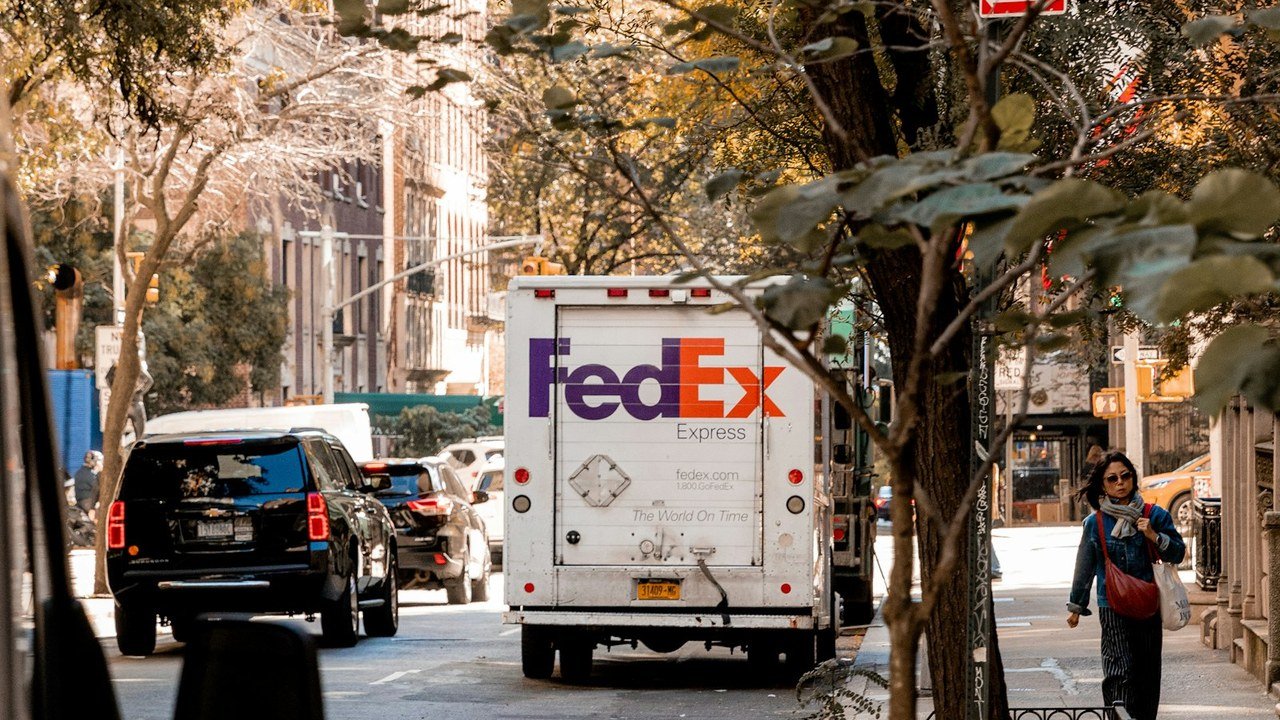
UPS pays the bigger dividend, while FedEx has far more cash left over after paying its own
United Parcel Service (NYSE: UPS) and FedEx (NYSE: FDX) head into the holiday shipping season with their dividends moving in opposite directions. UPS yields about 5.9% at $111.45 a share, while FedEx yields about 1.6% at $308.88 after it cut its quarterly payout 15.9% this summer. On coverage, the advantage runs the other way, and that gap determines how much of each check you can count on.
Income Snapshot
- UPS: $1.64 per share per quarter ($6.56 a year), next payment December 3
- UPS yield: about 5.9% at $111.45
- FedEx: $1.22 per share per quarter ($4.88 a year), down 15.9%
- FedEx yield: about 1.6% at $308.88
Where the UPS and FedEx Dividends Come From
Both companies pay their dividends out of the cash their shipping networks generate. For that reason, free cash flow is a more useful test than reported earnings. Both also posted a fourth consecutive quarter of results that beat expectations, so neither payout faces pressure from a recent miss.
UPS has paid $1.64 per share each quarter since February 2025, or $6.56 a year, and its next payment arrives December 3, in the middle of the peak shipping rush. The record behind that check runs across 109 recorded dividends without an interruption. UPS paid $1.02 per quarter in 2021, $1.52 in 2022 and $1.63 in 2024, so its quarterly rate has climbed about 61% since 2021. Recent raises have flattened to a penny, though. At a 5.9% yield, $10,000 invested in UPS would pay about $590 a year.
FedEx took a different path. It raised its dividend every year, from $0.75 per quarter in 2021 to $1.45 in 2025, then lowered it to $1.22 with the June 22, 2026 ex-dividend date. That payment was its first after the June 1, 2026 spin-off of FedEx Freight. The 15.9% reduction leaves a forward annual rate of $4.88 per share.
A spin-off moves part of a business, and its cash flow, out of the parent company, so a smaller parent dividend can follow. If you held FedEx through the separation, your total income also depends on any payout FedEx Freight sets on its own shares.
How Well Free Cash Flow Covers Each Payout
UPS expects to pay roughly $5.4 billion in dividends in 2026 against about $6.1 billion of adjusted free cash flow. That means the payout consumes about 88.5% of free cash flow. The year-to-date numbers look tighter still. Through the third quarter, UPS generated $4.2 billion of free cash flow and paid out $4.1 billion in dividends, which left about $100 million. That leaves little room for buybacks, which totaled $1.0 billion in 2025.
UPS management is counting on margin gains to widen that cushion next year.
Rising free cash flow in 2027 should “improve our dividend coverage,” said UPS’s Brian Dykes.
FedEx has far more slack. At $4.88 per share across about 234.2 million shares, its dividend costs about $1.14 billion a year. That works out to roughly 28.6% of the $4 billion in adjusted free cash flow FedEx projects for calendar 2026. The leftover cash funded $2.0 billion of buybacks from June through September, and FedEx still has $4.3 billion available under its repurchase authorization.
The company also used the spin-off to shrink its debt. A roughly $4.1 billion dividend from FedEx Freight, plus cash on hand, paid for a tender offer covering about $4.9 billion of debt. A lighter balance sheet gives FedEx’s smaller dividend another layer of support, because less cash has to go to interest.
Risks to Your Capital in UPS and FedEx Shares
The main risk at UPS lies in that 88.5% figure. When a dividend absorbs nearly all free cash flow, a weak quarter or a soft peak season leaves a company with uncomfortable choices: borrow, halt buybacks entirely or cut the payout. The current dividend rests on 2027 free cash flow growing faster than the dividend bill. If that growth falls short, the high yield stops being an attraction and becomes a warning sign. In that case, FedEx’s smaller check would carry the stronger footing of the two.
A yield near 6% also says as much about the share price as about the payout. Yields this high often reflect market doubts about how long a payout can last. The yield is not the return you earn, either. If UPS shares fall, a capital loss can wipe out several years of dividends.
FedEx carries different risks. It has already shown it will reset its dividend when the business changes shape, and the 1.6% yield delivers far less income per dollar invested. With FedEx, more of your total return depends on the share price, which leaves less income to draw on if that price drops.
The two stocks also share one exposure. Both companies live off the same parcel-shipping cycle, so owning both adds little diversification to an income portfolio. A slowdown in shipping volumes would put pressure on both companies’ cash flow at the same time, and UPS has much less room to absorb it.
The Bottom Line for Income
UPS pays the larger dividend, with an uninterrupted record across 109 payments, but that payout absorbs about 88.5% of free cash flow and depends on cash growth in 2027. FedEx pays far less after a 15.9% cut, yet its dividend uses only about 28.6% of projected free cash flow. The choice for income comes down to a higher yield with a thin cushion versus a lower yield with plenty of room.